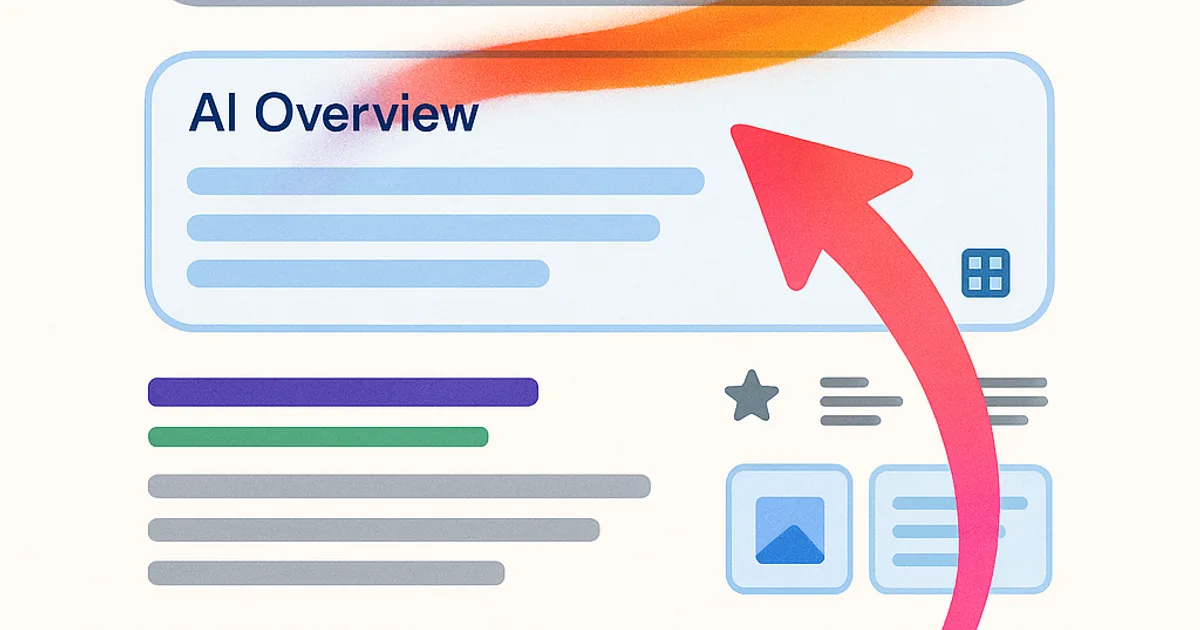
AI is transforming SEO, but not alone
AI content has become a powerful tool in SEO, but relying solely on it won’t guarantee success. According to Search Engine Journal, modern SEO strategies demand a balanced approach that integrates AI-generated content with human expertise. AI excels at addressing long-tail queries and adapting to user intent shifts, but human oversight ensures quality, relevance, and alignment with brand voice.
For instance, AI might help scale content production, but it can’t replace the nuanced understanding of user needs that comes from experience and data-driven insights. In practice, this means pairing AI tools with robust editorial workflows, focusing on intent optimization, and leveraging first-party data to refine targeting.
What this means for your stack: AI is a complement, not a replacement. Build workflows that combine AI efficiency with human oversight for maximum impact.
---
New branded search controls in Google Ads
Google appears to be testing branded search controls within its AI Max campaigns, as reported by Search Engine Land. This feature could allow advertisers to better differentiate branded and non-branded traffic, addressing a long-standing challenge in campaign management.
For ecommerce teams, this development is significant. Branded traffic often converts at a higher rate, but lumping it together with non-branded traffic can obscure performance insights. These new controls could provide more granular data, enabling advertisers to allocate budgets more effectively and optimize for ROI.
What this means for your stack: Monitor Google Ads updates closely. If rolled out widely, these controls could transform how you analyze and allocate ad spend across branded and non-branded campaigns.
---
SERP layout shifts: Position #1 isn’t what it used to be
A study highlighted by Search Engine Journal reveals that the top organic position on Google’s SERP now appears significantly lower on the page for many queries. This shift is driven by the increasing prominence of AI-powered features, knowledge panels, and ads, which push traditional organic results further down.
For ecommerce brands, this means that ranking #1 isn’t enough to guarantee visibility or clicks. Instead, optimizing for SERP features like AI overviews, FAQs, and image packs is becoming critical. These elements can capture user attention earlier in the search journey, even before they scroll to organic results.
What this means for your stack: Focus on SERP feature optimization. Analyze which features dominate your target queries and adapt your content to align with them.
---
Commercial queries and AI overview data
Google’s AI-generated overviews are evolving, particularly for commercial queries. As noted by Search Engine Journal, the data displayed in these overviews varies significantly based on the query type and market. This variability underscores the importance of understanding how Google’s AI interprets and serves information for different intents.
For example, a product-related query may trigger an AI overview emphasizing price comparisons, while a service-related query might focus on reviews or feature highlights. This divergence means ecommerce teams must tailor their content to match the specific needs of their target audience and the nuances of their market.
What this means for your stack: Audit your content for alignment with AI overview trends. Ensure your commercial pages address the specific intents Google prioritizes in your niche.
---
AI skills hiring trends in SEO
As AI continues to reshape the SEO landscape, the demand for AI-specific skills is surging. A report from Moz Blog analyzed 1,543 job listings to identify the most sought-after AI-related skills in SEO. Key areas include AI-driven optimization (AEO), geographic SEO (GEO), and advanced measurement techniques.
For professionals aiming to stay competitive, this means investing in skills like prompt engineering for AI tools, data analysis for SERP performance, and understanding how to leverage AI for content ideation and optimization. Employers are also looking for candidates who can bridge the gap between technical SEO and strategic content creation.
What this means for your stack: Upskill your team in AI-driven SEO practices. Focus on areas like AEO, GEO, and data-driven decision-making to future-proof your capabilities.
---
Sources
---
Authored by the ControlVitals Editorial Team — performance and SEO practitioners auditing real production sites every day.
Editorial transparency: this article was researched and drafted with AI assistance, then reviewed by our editorial team for factual accuracy before publication.